Sophocles was born in Colonus, Greece, in 496 B.C,
and died in Athens, Greece, in 406 B.C. He was one of the three of Athen's
great tragic playwrights during that time. Sophocles wrote a total of 123
dramas in his life, Oedipus the King being
the most famous of them all. Aeschylus being the oldest, and Euripides being
the youngest of the three classic playwrights, Sophocles was in the middle for
age. He was a great talent, and from his physique, athletic ability, and
musical skills, he was praised and chosen for many things during his early
life, before he became the playwright talent he was. His last recorded act was
to lead a chorus over the fall of his rival, Euripides, when that same year of
406, Sophocles had died as well.

Dramatic
irony is defined when the audience or reader of literature or a play have more
knowledge of what can or will happen in the story than the characters
themselves know. The things that happen for the characters, and what they say,
are more meaningful for the audience than the characters in the story. A
character could say or do something that they are unaware will wreck a part of their
lives, when the audience is dreading the experience of knowing the character's
fate, when the character is clueless. For example, there is dramatic irony
throughout Oedipus the King, when we
the audience know that his biological parents are the ones from the kingdom
that he runs back to, killing his father on the way and marrying his mother,
when all he knows at the time is that he is now king and his 'parents' back at
home are not a part of his life anymore.
Dramatic irony is a technique used in lots of literature from 1500 years
ago to contemporary literature, and many playwrights.

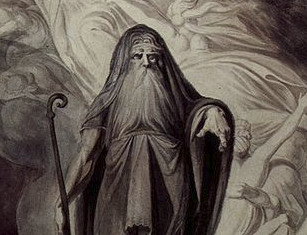
Teiresias
is a prophet of Thebes, and is an important figure in Greek mythology, being
the most famous blind prophet and soothsayer of ancient Greece. The story of
Teiresias is that he once saw Athena bathing, causing her to blind him from her
hands. From his mother's pleading, in exchange for being blinded, he was given
the gift of prophecy. From the gift of prophecy, he has shared the prophecies
of many figures to them in person, such as revealing to Oedipus that he,
Oedipus, had killed his own father and not just some man on the road.
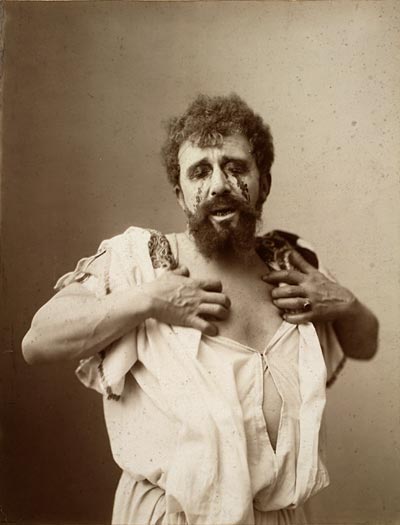
Fate
is something to be destined to happen in one's life, from the spiritual level
or a supernatural power. Fate can be a generalized term, but to the Greeks, the
definition of fate was more specific and meaningful. The idea of fate was
something that is created for one's life from the things that they do. If a
person does a heroic action that ultimately kills them, that prideful death becomes
part of their fate and by their fate, they will have a rewarding afterlife. The
Greeks say not even a god can escape their own fate, and that fate is not
something of an individual god, but something inside of humans and gods, and a
force out of our reach. Fate is not something of a generalized and coincidental
idea to the Greeks, but something by prophecy according to the actions of
someone, which controls what happens before and after life.
Greek
theater was the biggest thing in entertainment in ancient Greece, and Greek
theaters were where all the famous playwrights of this time were performed.
There were many famous Greek theaters such as the one of Epidaurus or Dionysus.
Greek theaters were all built in a similar structure, where the orchestra is in
the center of the stadium, the skene is the giant tent behind the orchestra
that's not surrounded by the audience, the parodos are where the singers/actors
came from off to the sides, and the theatron is where the spectators sat to
watch, surrounding most of the stage.

Oedipus
Rex (the king) or Oedipus the King was
a tragic play written by Sophocles, and it was performed sometime between 430
and 426 B.C. It is about a man named Oedipus who thinks his parents are
of another kingdom, but his real parents are the ones of a kingdom in which he
kills the king, or his father, in a fight and he marries the queen, or his
mother, becoming a king through incest and murder. As the new king, he tries to
find the murderer of the past king, clueless that the murderer was himself.
Oedipus tried to run away from his own fate, and in the end had a life of lies
and a worse fate than he was supposed to have through his original path in
life.

Oedipus
was the child of Laius and Jocasta, also known as the ruling couple of Thebes. Jocasta
is the mother of Oedipus, and the one he marries and who becomes his queen. Laius
was the father of Oedipus, the man he kills on the road, and the king he tries
to seek out the murderer of, until finding out it was he, Oedipus, all along.
Oedipus had his ankles spiked through as a baby when he was left on Mt.
Cithaeron to die, and that's why his name is Oedipus, because it literally
translates to 'swollen-footed'. Oedipus has an unknowing life of a lie, destined for a disturbing truth and worse fate.
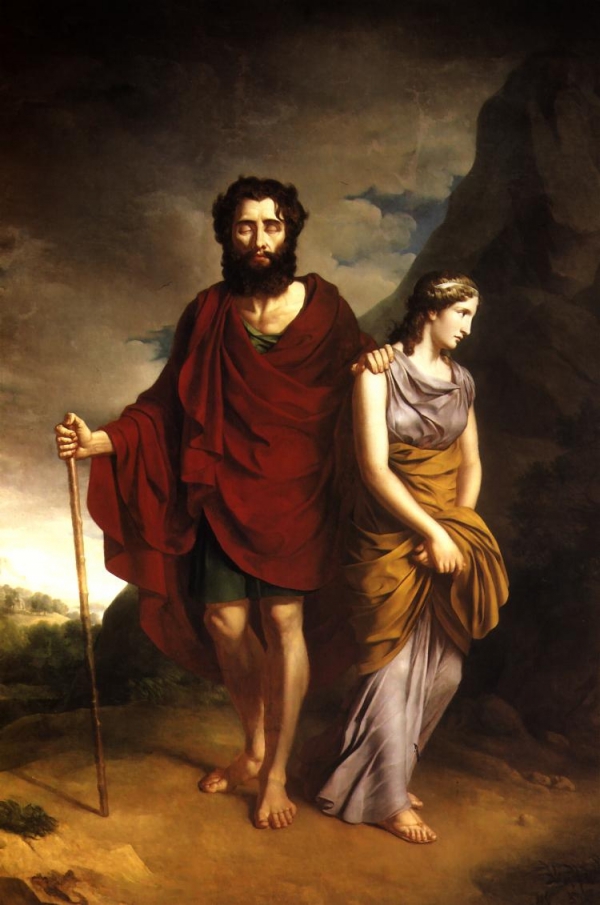
Oedipus
was left to die, but his destiny allowed him to survive, when he was rescued by
a peasant employed by King Polybus of Corinth. He was adopted and raised by
Polybus and Merope of Corinth, not knowing for most of his life that they were
in fact not his biological parents. One night, a drunken man shouted at Oedipus
that his true father was someone else, and from there and on, Oedipus could not
live with his 'parents' without meeting his real parents. He goes to the Oracle
at Delphi to ask who his real parents are, only getting the unsettling response
of prophecy, that he will marry his mother and kill his father. Scared of doing
this with his 'parents' he flees Corinth in search of another kingdom, so not
to end up fulfilling the prophecy. On his way, he kills a man at a crossroads
in a fight, and much later on, he marries the queen of Thebes, not knowing that
he had just married the woman who was his mother and killed the man who was his
father. Many more events happen between then, but this is the myth of Oedipus
and the summarized myth of everything beforehand of the play, Oedipus the King.

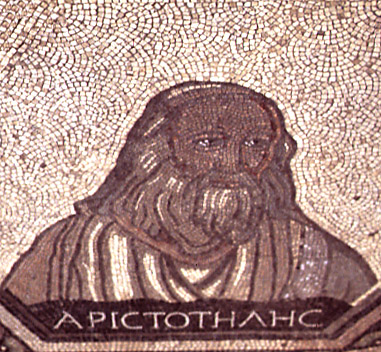
Aristotle
was born in 384 B.C in Stagirus, Greece, and died in 322 B.C in Chalcis,
Greece. His father, Nicomachus, died when Aristotle was 10, and his mother,
Phaestis, died in his youth as well. He was raised by his uncle, Proxenus, who
was his teacher and educated him on Greek, rhetoric, and poetic writing.
Proxenus admitted Aristotle in Plato's academy as a teenager, and this is where
Plato and Aristotle became associated, Plato being the teacher and Aristotle
being the student. After 20 years of Aristotle as a professor of rhetoric and
dialogue, Plato died, and Aristotle left to Assos, becoming the chief of
philosophers there. Within 15 years or so, he marries twice and has two kids,
and goes back to Macedonia due to an attack. Later, Aristotle sets up his own
institution, called Lyceum in Athens, where he taught for the next 12 years. He
taught: logic, physics, astronomy, meteorology, zoology, metaphysics, theology,
psychology, politics, economics, ethics, rhetoric, and poetics. The few works
that have survived over thousands of years came from this period of his life.
Aristotle was a very important and famous Greek philosopher of his time and
will live on in history forever with his philosophical ideas.

Aristotle
had a very specific definition of what a tragedy is. "Tragedy, then, is an
imitation of an action that is serious, complete, and of a certain magnitude,
in language embellished with each kind of artistic ornament, the several kinds
being found in separate parts of the play; in the form of action, not of
narrative, through pity and fear effecting the proper purgation of these
emotions" -Aristotle. With this quote, there are three words that can
describe what he means by 'purgation'. The first is purification, as in the
tragedy 'purifies' the pity and fear so we feel only those emotions. The second
is purging, or the cleansing of harmful emotions such as pity and fear from the
body, for focusing on the ones being purified. The third is distillation, as in
the tragedy creates stronger pity and fear only in the tragedy itself, from
purging any other emotions outside the tragedy, so the tragedy becomes even
more intense for the audience. Tragedies, according to Aristotle, also create
imitations, and the feelings of pity and fear through this and the actions of
the play.
According
to Aristotle, the definition of hubris is simple, and the horrid trait of
people that change their fate for the worse. Hubris can be defined as the
excessive pride in use of shaming someone for their own pleasure, which leads
to a worse fate of death and after death. Hubris was something of serious
consequences, and was punishable by Greek law. In Greek tragedies, hubris always
leads to conflict and the punishment or death of the person who was hubristic.
Whether in playwright or reality, hubris was a very wrong and highly consequential
thing in tragedies and ancient Greece, and anything hubristically done in
today's societies, depending on what it is, will also have a punishment.


About.com. "What Was the Crime
of Hubris in Greek Tragedy and Law?" About.com Ancient / Classical
History. About.com, n.d. Web. 17 Jan. 2014.
Ancientgreece.com. "The
Forum." Ancient Greece. University Press Inc., 2012. Web. 16-17
Jan. 2014.
Encyclopedia Britannica. Encyclopedia
Britannica Online. Encyclopedia Britannica, n.d. Web. 15-17 Jan. 2014.
Greek Mythology.
"Teiresias." Teiresias. Greekmythology.com, 2013. Web. 16 Jan.
2014.
Page, Larry. "Google." Google.
Google Inc., n.d. Web. 15-17 Jan. 2014.
ReligionFacts. "Greco-Roman
Religious Beliefs." Ancient Greek Religious Beliefs. N.p., 2014.
Web. 16 Jan. 2014.
Walter Englert. "Greek
Theater." Greek Theater. Hum110 Tech., n.d. Web. 16 Jan. 2014.
K. Wheeler. "Aristotle's Definition of Tragedy" Tragedy web.cn.edu., n.d. Web. 17 Jan. 2014.

No comments:
Post a Comment