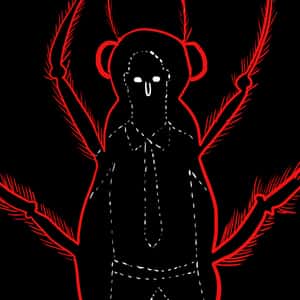
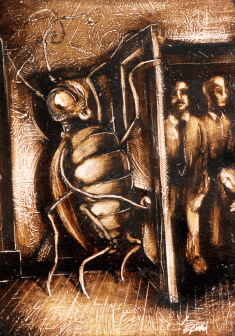
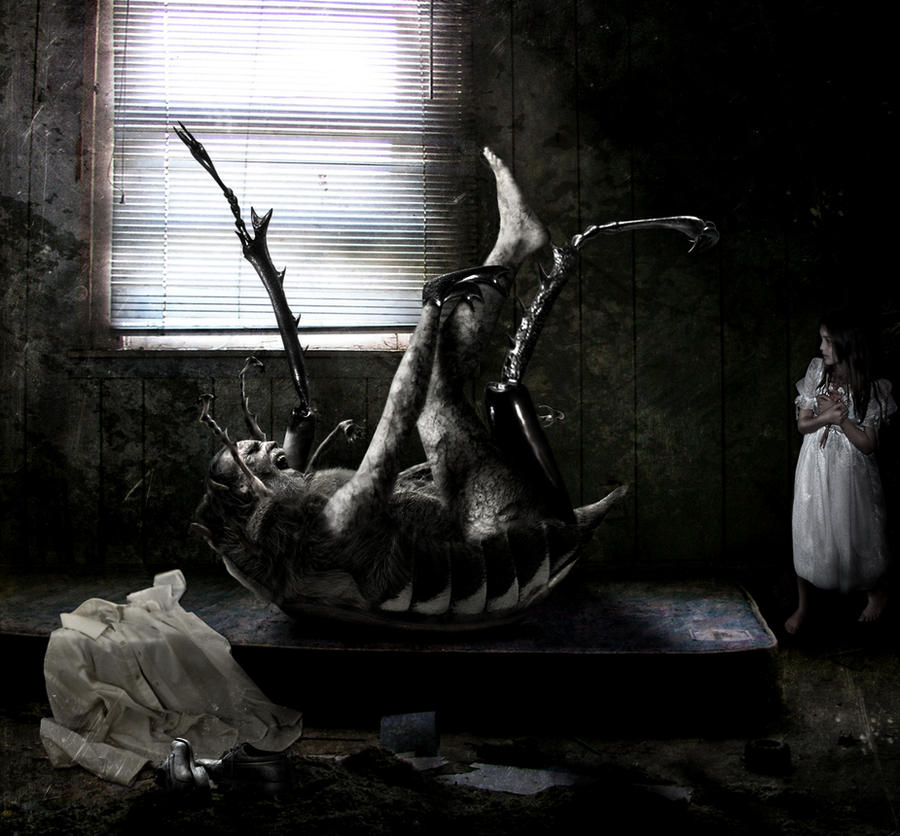
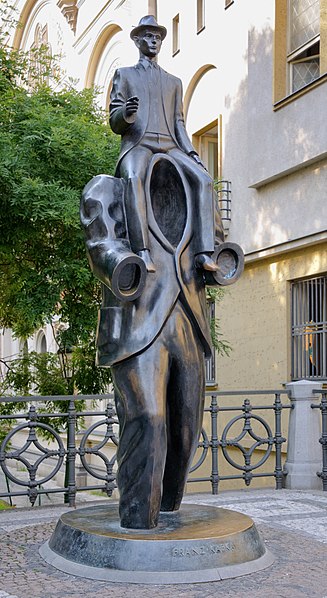
The idea of empathy in human beings, our existence, and life itself, is one of the hardest things to grasp and fully understand. Empathy is the feeling of sympathy, but to the highest, most difficult to reach, possible level. Unless you're apathetic and/or a Nihilist, it's common ground to say for example, that the murder of a human being is saddening on so many levels. The question is, does everyone feel empathetic, where you instantly feel total sorrow for the death of another being of our race. They may have been a complete stranger living across the country, but you can feel the human connection of a loss of another human being, and in a way, feel their pain through empathy. Certain people are, by fact, wired differently in their minds through difference in how their mirror neurons work, their emotional mindset, and literal capability of empathy in the mind. The period of modernism in art and literature, was a time of depressions everywhere, and because of that, the modernist writers of that time wanted to write in a style that is bound to make you feel the pain of others. Physical pain of the wound of someone else is of course impossible to feel through empathy, but through modernist writing, the writer can make one feel the emotional and mental pain of the wounded one. Empathetic people don't spiritually receive this pain from the injured souls, but rather create our own pain through our sorrow for the injured being. Existentialists are generally always empathetic, because embracing life, the existence of oneself, and trying to find the self in the life one gets makes them feel an intense empathy for others. No matter if they're Nihilists, if they're a human being and are in some pain, empathetic people feel their pain, because that's just how these people are wired, and how every human in this world should be. In The Metamorphosis, Gregor Samsa is a hard working soul, who is only trying to help his family get by, from suffering through his unhappy life. He works a stressing job to pay off his family's debt, only caring about them and not himself, when he could be living his own life, on his own. In return, his family gives him nothing back, no relation, no love, no respect, no attention. When Gregor wakes up as a bug, he only cares about how he is going to break the news to his parents, his sister, and his boss without them giving him a hard time back, instead of caring about his own situation. He is helpless, in pain, and is fearful of his own self. In his room there is nothing to look to, nothing outside, in his room, or from his own family, but only the stranger woman he framed on his wall, and other objects that actually have a connection to him. The one thing he can look to is his inner self, and find himself; become an existentialist in a sense. Kafka was brilliant when writing The Metamorphosis because as a modernist writer, he wrote the most empathy deriving story one can write in the most creative fashion. Not only is the story of Gregor's life and problems pain-staking, but the style of writing goes on and on with descriptions that create so much empathy for Gregor, it's impossible not to feel some of Gregor's pain! Of course this was on purpose, because the modernist writing style was created to try and bring the human race together through mutual empathy, as world literature is written to do the same thing in different ways.
In Jeremy Rifkins video on empathy in its entirety, he explains how empathy is felt from one person for another, feeling the same pain on a different level, and how the minds of the human race that are wired right for empathy, very empathetic or not, can make a mutual connection between other human beings. Worldwide population of empathetic minds is something to be achieved, but probably never will, because some apathetic minds will never change, and some minds psychologically and neurologically cannot process empathy. It is safe to say, however, that throughout The Metamorphosis, the reader connects with the mindset and emotions of Gregor, and it is very hard, from Kafka's purposeful writing style included, to not feel some of Gregor's pain. The general population can feel sympathy, and more so than apathy, the average person can feel empathy. But empathy is something that has to be found through feeling rather than the simplified feelings of sympathetic reaction. There are many instances in the story where Kafka explains Gregor's feelings through symbolism or the literal aspects. The descriptions of dark versus light, how his bedroom changes, his size changing scene after scene, and more, all are symbols of how Gregor is at that point in the story. Gregor's thought processes, actions, and words that he says (but his family can't hear) all are literal ways Kafka explains Gregor's feelings. Even as a fictional character from a story, there is a connection between the reader and the character, sometimes stronger than others. Of course Gregor doesn't really exist, but Kafka's writing about him does, and that is what the reader interprets for themselves which creates the empathy for the character, ultimately making a connection with something non-existent. Because empathy is derived for Gregor, but he is non-existent, it makes one find out more of life and oneself from the empathy. This is a big way in how existentialism is tied in with empathy, and what it's all about. As a philosophy, existentialism needs something that people can feel, connect with, and believe in to embrace existence, nature and the self, and more, and that is why empathy is important. Empathy is and should be felt for Gregor, and if that's true, empathy should be felt by everyone in one way or the other throughout the world.
Monday, April 7, 2014
Thursday, April 3, 2014
The Metamorphosis of Humanity
The story of The
Metamorphosis by Franz Kafka is a giant metaphor to what human beings
really are, and the ills of humanity and society. Gregor Samsa wakes up one
morning and sees himself as a bug, and then realizes he really is a giant bug.
From here and on, he is seen as only a pest and a monster, rather than a
person, only because he is of different form. His parents and sister, Grete,
don't know the bug is Gregor because he can't communicate with them in his
disgusting form. Gregor, when he was in human form and was treated like one,
was still used by his family. Gregor was a traveling salesman, which made him
never able to connect with his family or make friends. From the start, he was
deeply alone, with no true relationships, and thus was in a state of sadness.
Kafka shows Gregor's loneliness in many ways and to such a level, that Gregor
feels more like a human being than he did before. "He felt himself
included once again in the circle of humanity and was expecting from both the
doctor and the locksmith, without differentiating between them with any real
precision, splendid and surprising results" (Kafka 6). The fact that
Gregor feels more included and attended to than ever when his parents finally
worry about him being in the bedroom for so long, and try to get a doctor and
locksmith to open his door and see if he's okay, is saddening. They're paying
more attention to Gregor than they ever do, only because they are worrying. His
parents are probably wondering if he's okay so they can keep living off of his
money for their riches, not at all wanting to converse with their own son. Once
his family gets in and finds out he's a bug, they are frightened and all at
once don't care that Gregor is in trouble and stuck in the form of a bug, but
only that he is now a bug and not a human being, so therefore he's not their son/brother
anymore and should be treated like a pest. "...'things
cannot go on any longer in this way. Maybe if you don’t understand that, well,
I do. I will not utter my brother’s name in front of this monster, and thus I
say only that we must try to get rid of it. We have tried what is humanly
possible to take care of it and to be patient. I believe that no one can
criticize us in the slightest.' 'She is right in a thousand ways,' said the
father to himself'" (Kafka 23). Instead of helping Gregor and being
compassionate with him even though his form has changed, they totally disregard
that and automatically assume he is no longer Gregor, but a different form and soul, and thus treat him worse than
before; like a monster. His father being the most ignorant and the mother the
least, the parents and Grete all just don't understand that the bug is Gregor,
and that he is not trying to scare them or intrude, but rather be close to them
like he would as a human being. He is still a human being inside, but he is
trapped by a fearful exoskeleton on the outside. Before this whole
transformation, Gregor was the member of the family who had to do everything to
keep his family with a home, and not allow himself to live his own life and pay
for his own expenses. His family relies on him, even though out of choice,
Gregor would rather only rely on himself, and let his parents live their own
lives as well, not live off of him. From this forced way of living, Gregor has
become a man who is considered for everyone because he has had to live a life
of consideration for his family and not himself. "He scarcely wondered
about the fact that recently he had had so little consideration for the others.
Earlier this consideration had been something he was proud of" (Kafka 22).
Gregor was used to this style of life, and came out to be good at the forced
consideration for others. He thought of this as one of his skills, in which it
was, but not something to be really proud of considering his circumstances. He
realizes how much he is feared, hated, and the lack of compassion and treatment
from his family, that he figures out how much time and energy he has wasted on
these people by allowing them to live the way they want, when they won't even
give him the care and respect that he deserves back. This is all because he is
now a 'different creature', but Gregor realizes that he's been treated this
way, to a certain extent, his whole adult life. He has so little consideration
for people once he's been a bug for a couple months because he no consideration
to give anymore, as he is in his own hell.
The
way Gregor's room connects with his emotional and physical state is pretty
great, and many events in the story happen in his room, as well as many
descriptions are about his room. His states and the room's state are linked
most of the time, and everything that's put into the room or taken out, Gregor
responds to, and everything that Gregor feels has a metaphorical response from
the room. The first element is the color of what he is able to see, which is
seen through Gregor's window, and it always connects with Gregor. "The
hospital across the street, the all-too-frequent sight of which he had
previously cursed, was not visible at all anymore, and if he had not been very
well aware that he lived in the quiet but completely urban Charlotte Street, he
could have believed that from his window he was peering out at a featureless
wasteland, in which the grey heaven and the grey earth had merged and were
indistinguishable" (Kafka 13). The color of grey is used to describe what
he not only is believes to see, but what he feels. He knows the image of what
there is to see outside his window, so when he sort of makes out something in
the distance, he imagines it as it would be in full clarity because he knows
what it really looks like. Instead this color of grey outside fills the light,
blocking out buildings that he normally sees. The analogy he uses to describe that
everything is a mesh of grey, like the heaven and earth have meshed into one
grey life, shows his sadness. Heaven and earth should be easily recognizable
and different from one another, but to describe the image outside that it's
like they're one is saddening. The color grey also represents a moody state of
nothingness in a way, whereas clear represents visibility and freedom of soul.
Another element is the weather, and how it connects with Gregor's emotion.
There are many examples of weather metaphors as well, but the most recognizable
one is rain. "Gregor’s glance then turned to the window. The dreary
weather—the rain drops were falling audibly down on the metal window ledge—made
him quite melancholy"(Kafka 1). This sentence itself describes Gregor's
feelings with the weather, and how they're one. Rain symbolizes sadness, and
Gregor definitely feels this way when he wakes up as a bug. There are other
scenes with rain, or dreary weather, and others with clear weather. In this
whole story, besides moments of pleasure from food and attention, he is never
happier than he is from the day before the next morning when he wakes up as a
bug. The weather is definitely a key element of describing these emotions. The
other important element of Gregor's room is how it gradually dies as he does,
and changes whenever he does. "...he had to tell himself
unequivocally that he would not be able to endure all this much longer. They
were cleaning out his room, taking away from him everything he cherished;"
(Kafka 16). This is one of the many examples of scenes when the room changes,
and Gregor responds, or vise versa. When his mother and Grete are moving things
out of his room, Gregor feels a sadness that all the things he was actually
familiar with are also leaving him, as his family has already left him. He
cherishes the few things he can connect with left, which are his personal
belongings and room furniture. He can't take it and goes to retrieve the
picture of the random woman from the magazine that he loves and has his lonely
connection with. This is one big scene where the room empties and depresses, as
he does. There are so many elements to talk about in the story, and so many
that explain what Kafka was really trying to convey through Gregor and his
story.
Friday, March 21, 2014
The Sadness of Gregor's Lonesome
Gregor Samsa is a selfless person with no one to
love and no one to truly love him back. He is a traveling salesman who lives
mainly on the road, going from place to place, never living in one place to
make friends or be close to family all the time. Whenever he is home however,
he is never looked out for or noticed in a cared-for way. When the story
starts, he wakes up as a giant, nasty bug and doesn't know how or why, but it's
really reality. He can't open the door right away when his family and manager
call for him at his bed room door, so they do become worried. "But at
least people now thought that things were not completely all right with him and
were prepared to help him" (Kafka 6). Gregor is realizing that maybe his
family does care for him on some level, because they don't leave him alone when
he never opens the door for them. Instead they worryingly try to call for him,
and ask if he's okay, and go to get the door open with a locksmith. From the
text, it doesn't seem that they are mad at Gregor for not opening his door, nor
careless, but curious and in worrisome. Gregor gets somewhat of a rush of
pleasure from being the one getting the attention, and simply being cared about
in a direct way. "He felt himself included once again in the circle of humanity..."
(Kafka 6). Gregor expresses his feelings of feeling important, and the one his
manager and family are paying attention to, and trying to free him from his
'locked' room. He expresses it in the manor of being a part of the human
connection again, showing how incredibly lonely and sad he is that he doesn't
feel like a human being anymore. In the irony of that, he is in fact not a
human being anymore physically, but literally a giant insect. From this scene,
when his family and manager are trying to figure out if he's alright and how to
get the door open since he cannot, Gregor feels loved in the way every person
should feel, especially from their own family, but also from other people they
know and/or love. This moment, before he opens the door and reveals his
insect-self to everyone, he feels a slight happiness, in which he rarely feels
most of the time.
When
Gregor wakes up that morning and sees himself as an insect, he doesn't seem to
care or fear it, but only notice it, and then complain about other things that
a normal still-a-human person would on a daily basis. The idea of realizing you
are a giant bug when you wake up from sleep sounds horrifying and very
concerning and surreal. Gregor doesn't react the way one would think, and it
shows his sadness in how he doesn't fear his new self. "Gregor’s glance
then turned to the window. The dreary weather—the rain drops were falling
audibly down on the metal window ledge—made him quite melancholy. 'Why don’t I
keep sleeping for a little while longer and forget all this foolishness,' he
thought" (Kafka 1). His emotion is little and quite calm for such a crazy
change of himself. After he has examined himself as a nasty bug, he looks out
the window to see the melancholy weather, gray color and rain, which only
reminds himself of his sadness. It shows that his life has such a sadness, that
he isn't more saddened by the fact he's turned into a giant bug. He instead
thinks reality will go away after he sleeps a little more, knowing he was awake
since he just woke up from his 'anxious dreams'. The sadness derives completely
from his loneliness, form no love to receive, and much potential love to give.
When he wakes up, analyzing his body and the weather, he looks at his picture
on the wall. "... hung the picture which he had cut out of
an illustrated magazine a little while ago and set in a pretty gilt frame. It
was a picture of a woman with a fur hat and a fur boa" (Kafka 1). This
picture is a random women from a magazine who he has no personal relationship
with whatsoever, as she's a stranger. To cut out a picture and hang it with a
tack, or get a poster of a random woman is something for show or fun, but to
cut out a stranger and put the picture in a frame is different. Framing
pictures shows a care for its expense and art, or because the picture is
personal; family, friends, or other loved ones. The fact the Gregor frames a
woman he doesn't know shows the love he is willing to give and have, but to
something unlovable. He is clearly lonely, and enough to not frame his own
family, but someone he wishes to know, or even just another human. His sadness
and loneliness are one, and his emotions, actions, and his bed room show this
in a thought through, intricate way.
Tuesday, March 18, 2014
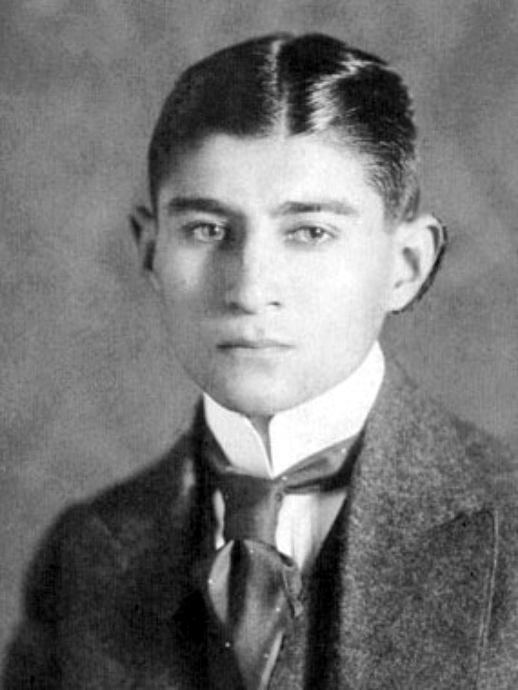
The Life of Kafka
Works Cited
Biography.com. "Franz Kafka
Biography." Bio.com. A&E Networks Television, 2013. Web. 17
Mar. 2014.
CliffNotes. "The Metamorphosis
and Other Stories By Franz Kafka Critical Essays Kafka's Jewish
Influence." Kafka's Jewish Influence. Houghton Mifflin Harcourt,
2013. Web. 18 Mar. 2014.
Nervi, Mauro. "Kafka's Life
(1883-1924)." The Kafka Project. The Kafka Project, 08 Jan. 2011.
Web. 18 Mar. 2014.
Page, Larry, and Sergey Brin.
"Google." Google. Larry Page, 1998. Web. 18 Mar. 2014.
Wikipedia.org. "Franz
Kafka." Wikipedia.org. Wikimedia, 17 Mar. 2014. Web. 18 Mar. 2014.
Monday, March 17, 2014
Nielsen's Inferno
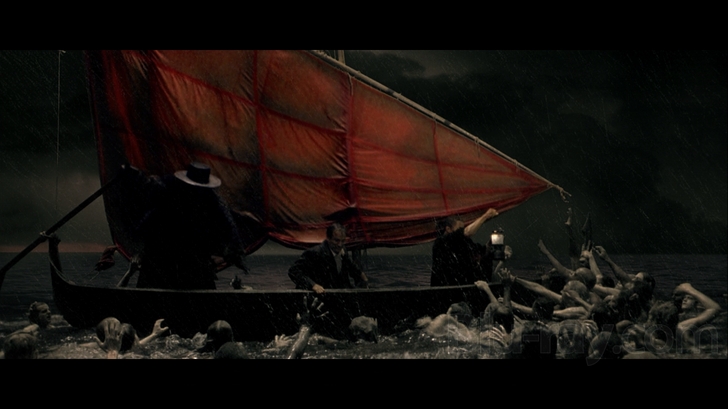
The movie What
Dreams May Come is a visually stunning journey through the afterlife, and
is analogous to Dante's Inferno in so
many ways. Chris Nielsen is directly relatable to Dante in this movie. When
Dante starts his journey in the Dark Forest, his objective is to go through all
of hell to reach purgatory, and soon heaven to rejoice with the love of his
life, Beatrice. After Chris Nielsen's death, he goes to heaven, and his
objective is to see and speak with his wife who is still alive. They can
communicate through her paintings and what Chris sees in heaven because they
are true soul mates, but once she gives up in life and commits suicide, she
goes to hell, as suicide was a sin, and Chris can no longer communicate or see
her again. His mission becomes going through hell, like Dante, to find her
again. Dante takes the long journey through hell, which is a risk in itself,
because his desire is that strong, he is willing to risk his life and soul.
This is exactly the position Chris is in, and why. He is in heaven for eternity
if he chooses for his afterlife, but when he finds out Annie is in hell for
suicide, he is willing to risk his life and become stuck in hell like she, all
for her, and to be with her once again. The themes are very similar in both of
these stories, consisting of a life risking journey through hell to the end
where, if everything turns out the way they want, ends with the rejoicing of
their love and thus their eternal happiness. Another obvious similarity is
having the 'guide' character. In Dante's
Inferno, Virgil is the guide for Dante; the one who shows the right way,
the one who knows all or more of where they are and why, and who is basically
the mentor of the main character for the journey. In What Dreams May Come, Chris has a few guides. When he is in heaven,
his main guide is Albert Lewis, who he finds out is really his son Ian, in
Albert Lewis' form because he knew his dad looked up to him, as Ian looks up to
his dad (Chris). A secondary guide, who is more of a temporary mentor, is the
woman Leona, in the part of heaven where souls are reborn to life. Both Albert
Lewis and Leona are 'guides' for Chris in heaven, which is different to Dante's Inferno because Dante only goes
through hell, and his one guide is Virgil. But the third guide Chris has when
he is in hell, who is analogous to Virgil, is The Tracker. Chris learns a lot about the philosophy of afterlife
and what everything is around him, how it is what it is, and why in heaven and
hell from these three guides, as Dante learns a lot about the same aspects of
hell from Virgil.
Monday, March 10, 2014
End of the Cantos and Hell
Last week was the second week of Canto
presentations, and in my opinion, it went just as well as the first week of
presentations. Presentations were held on Monday, Thursday, and Friday, and
each day went as smoothly with the presentations as I thought it would with our
class. My presentation and project was due Friday, and I was lucky to have it at
the end of the week instead of at the beginning. TCAPs were from
Tuesday-Thursday, and it's not the fact that they are too hard of stressful,
but that they tire me out. Out of anything, TCAPs helped me and my personal
school work schedule, because I had no homework basically the whole week. Unfortunately,
being in Rent really booked my time the past two weeks, so I really had just
started the Dante project last Monday (besides paraphrasing) four days from my
project due date for this class. So every day I worked for hours on end to make
the writing excellent, visual creative, and presentation the best it could be.
In the end, at midnight Friday morning, I finished, and I feel good about what
I was able to do for this whole project, from effort to quality. I also feel
that I did well on the presentation, but with presentations or performances of
any sort, I always criticize myself on things I could've done better. Luckily
all the work and stress for this project is behind me, and now that I'm done
and have been learning and reading Dante forever it seems, I'm ready for the
next unit.
Not
only did I learn about Dante's Inferno
from working on my own Dante project, but I also learned a lot from classmates
on Dante's Inferno and its entirety
from each Canto. Canto XXV was my assigned Canto, and I am an expert on it, as
I know a lot about it and everything it has to offer in its contrapasso and all
of its metaphorical, literal, and symbolic literary elements. I have not become
an expert on every Canto, but I do have some knowledge about each one, in depth
or not, and can grasp Dante's entire journey through hell; each circle, each
level, the sinners and punishments, and basically every description. With that
said, there were certain Cantos that stood out to me, including mine of course.
Canto XXV included thieves as the sinners, and their punishment was of serpents
torturing them. One punishment is being strangled by snakes only to die, spawn
again and be strangled. The other punishment is to be squeezed so hard by
serpents, that one start melting forms into the snake, becoming one form and
two natures, which is based off the big allusion of incarnational parody. There
were many icons, including the former thief Vanni Fucci, and a former thieving
Centaur, Cacus. I could go on and on about Canto XXV, but these are some of the
main parts and elements. A Canto that caught my attention was Canto XX, because
of the sin it holds and the sinners it contains. Teiresias and Manto were
especially significant as diviners/sorcerers. Diviners, astrologers, and sorcerers
are the sinners in this Canto, and it interested me because I believe they
would not deserve to be in hell at all, yet they are in one of the deeper
levels. Their punishment is that they get their heads twisted backwards, and
are forced to walk backwards on a long circular path for eternity, representing
the following of truth and having to live with their 'lies' and trickery.
Another Canto I got a lot from was Canto XXII, which included barraters.
Barraters are people of fraud, who are negligent against people and/or are
corrupt politicians, such as Ciampolo. Their punishment is being thrown into a
boiling lake of tar, which is guarded by demon spawns called Malebranche, which
are flying demons weapons like tridents, hooks, etc. Suffering in the black tar
represents all the dark corruption the sinners put forth that they now have to
deal with in the burning blackness. The third Canto that I was interested most
was Canto XXIII. This Canto, also in the eighth circle of hell, contains the
sin of hypocrisy, including hypocrites as Caiaphas. The punishment for the
hypocrites is probably the most interesting, and the least eternally painful
compared to the rest in circles eight and nine of hell. Their punishment is
unique, and is truly the most painful to hypocrites only. Their punishment is
basically wearing monk-like cloaks that are gold and beautiful looking on the
outside, while the part they feel in the inside is full of heavy lead. This is
symbolic to hypocrisy because the outside of the cloak represents how things
seem from what hypocrites say and do, the truth and greatness, while in the
inside of the cloak they suffer from the dark, heavy load their hypocritical
ways have created, defying real truth, and coming back to torture them in the
form of lead in their dark cloaks for eternity. These were the four Cantos,
including mine, that stood out to me the most and what I got more information
out of than some others because of my interest towards them. I did learn about
each and every Canto throughout these presentations and research, learning
everything needed to end this unit of hell in a good way, and I feel mine and
everyone else's projects were a success.
Monday, March 3, 2014
Meeting Dante and Hell
We learned not only about our own cantos, but about
cantos 1-18 as well. We were given Monday and Tuesday in ALA to research more
on our chosen cantos, and for me, I didn't have to stress about working on the
visual and/or Prezi presentation on those days too because I don't present
until March 7th. Regardless, I have a lot of work to do still, and I have only
started to work on the writing part. I finished paraphrasing Canto XXV last
week on Friday, but I still have to write everything else, make the visual
presentation, and create the Prezi presentation all this week. I had no time to
do any of this project over the weekend because of my other two projects I had
in various classes, and the four performances I had from being a part of the
school musical. Now I have no excuses, and every night from now until this
upcoming Friday, I will be working on Dante's project from hell.
The
first two days of last week as I said were research and work days, but then on
Thursday and Friday, the class started presenting, starting with Canto III,
since Mrs. Cawlfield did Cantos I-II. By the end of Friday, we had gotten
through cantos 1-13, and from these presentations I have learned about each and
every one, besides cantos 8 and 13 as the presenters were gone, and the
progression of Dante's journey through hell. It is interesting on how Dante
tells this epic story, what his reactions are for each punishment in each level
of hell, and of course the reactions of my classmates. From Canto I and on, the
punishments overall, only get more sinister, evil, torturous, and dark. The
ones that caught my attention the most in punishment were Canto X, and how the
heretics have to burn in flaming tombs for eternity, or Canto XIII, where the
suicidal people turn into trees and have to be pecked by Harpies forever, and finally
cantos 14-17, where all the blasphemers, sodomites, and usurers have to suffer
in a burning desert under raining fire forever. To me, for all the cantos I
just listed and most of the rest of them, I think their punishments in Dante's
hell are way too severe and torturous, and honestly believe a lot of the
'sinners' in this hell shouldn't be portrayed as a part of hell. Lots of the
sins that were sinful back then are outdated in a sense, and are just a part of
modern society and/or the lives of people today. It was cool to learn about
cantos 1-18 in this presenting way, as we did the rest up to the 18th canto
today in class. It may be more pressure and nerve-racking as time goes by, but
being one the last to present is nice because not only do I have the time to do
it, but I also have seen many presentations and I have a better sense of what
exactly to do and what the final product should look and be like. Last week
with presentations was a success, and I am soon ready to be a part of this week's
presentable success.
Subscribe to:
Posts (Atom)