Friday, March 21, 2014

The Sadness of Gregor's Lonesome

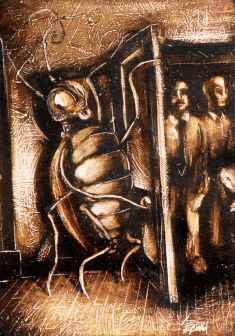
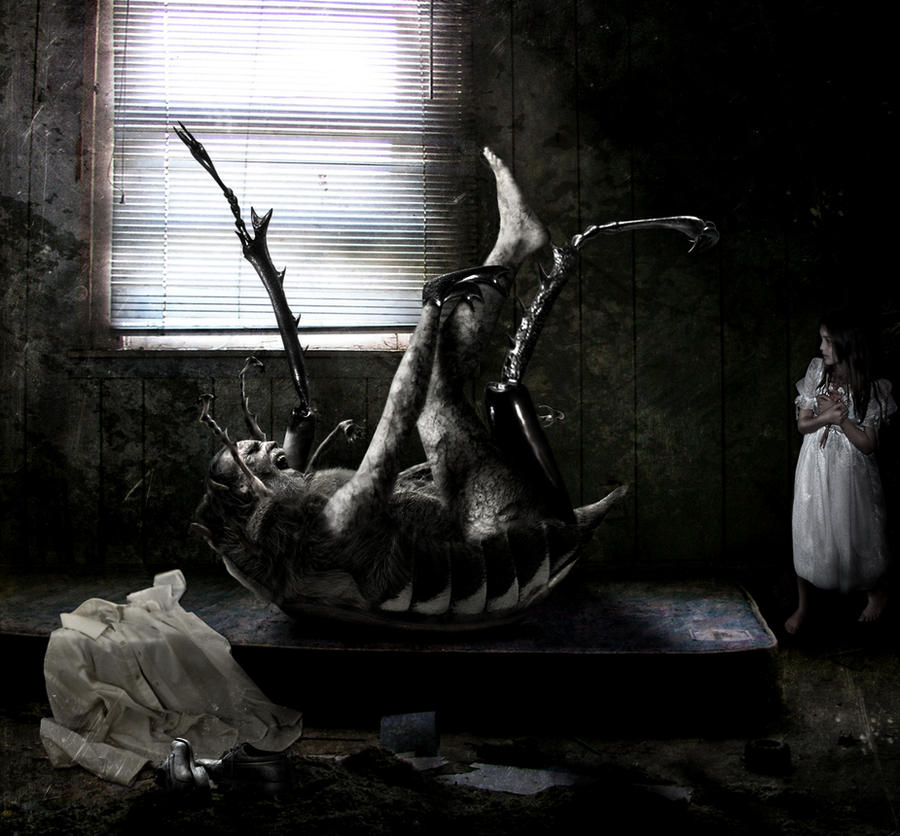
          Gregor Samsa is a selfless person with no one to love and no one to truly love him back. He is a traveling salesman who lives mainly on the road, going from place to place, never living in one place to make friends or be close to family all the time. Whenever he is home however, he is never looked out for or noticed in a cared-for way. When the story starts, he wakes up as a giant, nasty bug and doesn't know how or why, but it's really reality. He can't open the door right away when his family and manager call for him at his bed room door, so they do become worried. "But at least people now thought that things were not completely all right with him and were prepared to help him" (Kafka 6). Gregor is realizing that maybe his family does care for him on some level, because they don't leave him alone when he never opens the door for them. Instead they worryingly try to call for him, and ask if he's okay, and go to get the door open with a locksmith. From the text, it doesn't seem that they are mad at Gregor for not opening his door, nor careless, but curious and in worrisome. Gregor gets somewhat of a rush of pleasure from being the one getting the attention, and simply being cared about in a direct way. "He felt himself included once again in the circle of humanity..." (Kafka 6). Gregor expresses his feelings of feeling important, and the one his manager and family are paying attention to, and trying to free him from his 'locked' room. He expresses it in the manor of being a part of the human connection again, showing how incredibly lonely and sad he is that he doesn't feel like a human being anymore. In the irony of that, he is in fact not a human being anymore physically, but literally a giant insect. From this scene, when his family and manager are trying to figure out if he's alright and how to get the door open since he cannot, Gregor feels loved in the way every person should feel, especially from their own family, but also from other people they know and/or love. This moment, before he opens the door and reveals his insect-self to everyone, he feels a slight happiness, in which he rarely feels most of the time.
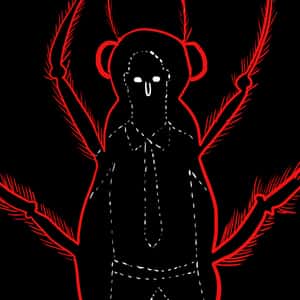


            When Gregor wakes up that morning and sees himself as an insect, he doesn't seem to care or fear it, but only notice it, and then complain about other things that a normal still-a-human person would on a daily basis. The idea of realizing you are a giant bug when you wake up from sleep sounds horrifying and very concerning and surreal. Gregor doesn't react the way one would think, and it shows his sadness in how he doesn't fear his new self. "Gregor’s glance then turned to the window. The dreary weather—the rain drops were falling audibly down on the metal window ledge—made him quite melancholy. 'Why don’t I keep sleeping for a little while longer and forget all this foolishness,' he thought" (Kafka 1). His emotion is little and quite calm for such a crazy change of himself. After he has examined himself as a nasty bug, he looks out the window to see the melancholy weather, gray color and rain, which only reminds himself of his sadness. It shows that his life has such a sadness, that he isn't more saddened by the fact he's turned into a giant bug. He instead thinks reality will go away after he sleeps a little more, knowing he was awake since he just woke up from his 'anxious dreams'. The sadness derives completely from his loneliness, form no love to receive, and much potential love to give. When he wakes up, analyzing his body and the weather, he looks at his picture on the wall. "... hung the picture which he had cut out of an illustrated magazine a little while ago and set in a pretty gilt frame. It was a picture of a woman with a fur hat and a fur boa" (Kafka 1). This picture is a random women from a magazine who he has no personal relationship with whatsoever, as she's a stranger. To cut out a picture and hang it with a tack, or get a poster of a random woman is something for show or fun, but to cut out a stranger and put the picture in a frame is different. Framing pictures shows a care for its expense and art, or because the picture is personal; family, friends, or other loved ones. The fact the Gregor frames a woman he doesn't know shows the love he is willing to give and have, but to something unlovable. He is clearly lonely, and enough to not frame his own family, but someone he wishes to know, or even just another human. His sadness and loneliness are one, and his emotions, actions, and his bed room show this in a thought through, intricate way. 


Tuesday, March 18, 2014

The Life of Kafka

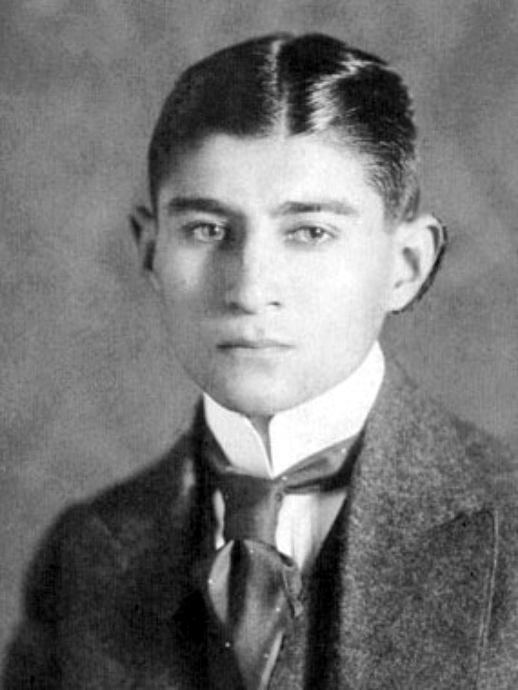
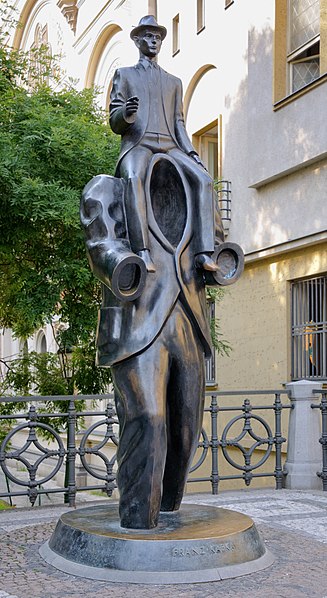
            Franz Kafka was born on the third of July, 1883, in Prague, Bohemia, which was part of the Austria-Hungary Empire back then, but is now the Czech Republic. He was born into a middle class, German-speaking Jewish family, and was the youngest of six children, Kafka being the oldest. His two younger brothers died at the ages of fifteen and sixteen months old, and he had three surviving, younger sisters. He was well educated throughout his youth and into adulthood. He attended the Deutsche Knabenschule German boys' elementary school from 1889-1893, and around the time he went on to secondary school, he ended his Jewish education with his Bar Mitzvah which was at the age of 13. His secondary school that he attended for eight years was Altstädter Deutsches Gymnasium, which was a challenging classic-oriented school. At the age of 18, he was admitted to the German Charles-Ferdinand University of Prague, in which he studied chemistry, and then law, in which he got a doctorate in on June 18, 1906. He had tough times in his childhood, such as his brothers dying at young ages. Overall he had a good childhood and youth, hiking with his friends, having many interests in athletics, education, and writing, and a good family.


            Kafka's adult life was full of promise and problems in different parts of his life. After receiving his doctorate in Law, he took a few jobs such as being a part of two insurance companies, the first, Assicurazioni Generali, in 1907 and the second, Worker's Accident Insurance Institute for the Kingdom of Bohemia, in 1908. In 1911, he started to work at Prager Asbestwerke Hermann and Co, a factory. He would always write regardless of his free time, but he became serious about writing around 1908. He would mainly write short stories, and many of them at that, but only publish a few in his adult life. In the midst of the businesses he worked for, he wrote these stories and novels at home. In 1912, he wrote the stories Das Urteil ("The Judgment"), Die Verwandlung ("The Metamorphosis"), and few others that became popular throughout literature. He wrote many novels in his adult life as well, such as Der Heizer ("The Stoker") in, or Der Process ("The Trial") in 1914. He had a troubling relationship with his father, and was discriminated against for being Jewish, which both of these personal hardships critiques believed influenced his own writing. He also had a problem with his sex-life, and how he had a lot of intimacies to compensate for thinking he was bad in sex and to make him feel good for other things that were going on in his life. Kafka had an overall pleasant adult life, with a few personal problems, but his writing career progressed well in silence. The few pieces he published were quite popular and are today in world literature.


            Kafka influenced writers of all kinds in the 20th century and today. His most influential and published writing was The Metamorphosis and it is studied in today's schools and universities for his style and creative, complex writing. Kafka had a particularly big influence on the Jewish population and Jewish literature in his hometown of Prague at the time, but he also is in Jewish communities around the world even today. Being the world known writer he was and is now, it was amazing to have such an influential Jewish writer back in his time, and especially because of where he was from. Not only was Kafka an influential figure in literature, but he was influenced by other things and people as well. Kafka followed Judaism, but was interested in Zionism, the protest religion that promoted the settlement of Jews in Palestine. The founder, Theodor Herzl, was one of his biggest influences. Other influences in the Jewish religion to Kafka were fellow friends such as Max Brod and Martin Buber, and teachers such as Thieberger and Dora Dymant. All these people were influential to Kafka because they taught him of Hebrew, Judaism in its whole, Jewish traditions and culture, and political points such as Zionism. These were important people to him because his interests and thus is writing was all based on Jewish aspects and religion, in a metaphorical and creative way. He was just as influential as he was influenced in many ways. Kafka wrote stories, novels, translations, and other forms of writing, creative or analytical, but his style of writing will always be easily recognized and will be forever.


            Franz Kafka died the third of June,1924. Kafka's death was caused from the disease laryngeal tuberculosis, a deathly cough. The main reason he died was because he starved himself to death, but only because his cough hurt his throat so much that it was too painful to swallow anything. He was sent away from his family to Berlin, so he would not infect his children, the year before his death. When he returned to Prague, it had only worsened, and he was sent to Hoffman's sanatorium for treatment on April 10, 1924, in which he stayed there until his grueling death. His three sisters all died 18-20 years later from/during the Holocaust, leaving the whole original Kafka family dead. Kafka died as a hero in literature, and will forever be remembered, cherished, and studied for his writing.


Works Cited
Biography.com. "Franz Kafka Biography." Bio.com. A&E Networks Television, 2013. Web. 17 Mar. 2014.
CliffNotes. "The Metamorphosis and Other Stories By Franz Kafka Critical Essays Kafka's Jewish Influence." Kafka's Jewish Influence. Houghton Mifflin Harcourt, 2013. Web. 18 Mar. 2014.
Nervi, Mauro. "Kafka's Life (1883-1924)." The Kafka Project. The Kafka Project, 08 Jan. 2011. Web. 18 Mar. 2014.
Page, Larry, and Sergey Brin. "Google." Google. Larry Page, 1998. Web. 18 Mar. 2014.
Wikipedia.org. "Franz Kafka." Wikipedia.org. Wikimedia, 17 Mar. 2014. Web. 18 Mar. 2014. 


Monday, March 17, 2014

Nielsen's Inferno

            The movie What Dreams May Come is a visually stunning journey through the afterlife, and is analogous to Dante's Inferno in so many ways. Chris Nielsen is directly relatable to Dante in this movie. When Dante starts his journey in the Dark Forest, his objective is to go through all of hell to reach purgatory, and soon heaven to rejoice with the love of his life, Beatrice. After Chris Nielsen's death, he goes to heaven, and his objective is to see and speak with his wife who is still alive. They can communicate through her paintings and what Chris sees in heaven because they are true soul mates, but once she gives up in life and commits suicide, she goes to hell, as suicide was a sin, and Chris can no longer communicate or see her again. His mission becomes going through hell, like Dante, to find her again. Dante takes the long journey through hell, which is a risk in itself, because his desire is that strong, he is willing to risk his life and soul. This is exactly the position Chris is in, and why. He is in heaven for eternity if he chooses for his afterlife, but when he finds out Annie is in hell for suicide, he is willing to risk his life and become stuck in hell like she, all for her, and to be with her once again. The themes are very similar in both of these stories, consisting of a life risking journey through hell to the end where, if everything turns out the way they want, ends with the rejoicing of their love and thus their eternal happiness. Another obvious similarity is having the 'guide' character. In Dante's Inferno, Virgil is the guide for Dante; the one who shows the right way, the one who knows all or more of where they are and why, and who is basically the mentor of the main character for the journey. In What Dreams May Come, Chris has a few guides. When he is in heaven, his main guide is Albert Lewis, who he finds out is really his son Ian, in Albert Lewis' form because he knew his dad looked up to him, as Ian looks up to his dad (Chris). A secondary guide, who is more of a temporary mentor, is the woman Leona, in the part of heaven where souls are reborn to life. Both Albert Lewis and Leona are 'guides' for Chris in heaven, which is different to Dante's Inferno because Dante only goes through hell, and his one guide is Virgil. But the third guide Chris has when he is in hell, who is analogous to Virgil, is The Tracker. Chris learns a lot about the philosophy of afterlife and what everything is around him, how it is what it is, and why in heaven and hell from these three guides, as Dante learns a lot about the same aspects of hell from Virgil.


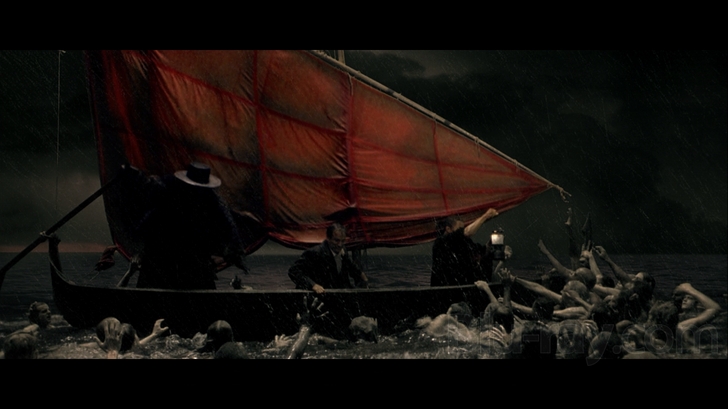
            The sins and punishments are abundant in Dante's Inferno whereas What Dreams May Come doesn't show/explain nearly as many, but a few parts of hell and the sins and punishments of them were the same as in Dante's hell. The biggest component that was similar by sin, was the sin of suicide. People who have committed suicide go to a specific layer of hell in Dante's Inferno (Canto XIII). Their punishment is becoming a tree where the bark, really one's skin, is peeled off by Harpies for eternity. In What Dreams May Come, Chris' wife Annie commits suicide and goes to hell because suicide is a sin from its disruption of the natural order of death. Annie goes to a layer of hell where there are people who have disrespected themselves or others, so people and life have disrespected them back of their wrong doings. The punishment for Annie and every other sinner is to be buried to the head in dirt that they can never escape from, where only their head can move and nothing else. The punishment in Canto XIII and this movie are similar because they both involve the sinner being restricted of movement, and thus their freedom and sanity.  The other big similarity is based off the Cocytus river scene in Dante's Inferno. In the ninth circle of hell, Dante and Virgil travel through the river Cocytus, in which they are on a boat where the dead sinners rise out of the water and try to grab them on the boat. This very same scene happens in What Dreams May Come, where Chris and The Tracker are on the red-sailed boat that Annie was on when they met in life, and the dead are trying to grab him and The Tracker from the river on their boat. There are many elements that are important to What Dreams May Come, such as the element of color, but when comparing these two stories through elements, there are more, different similarities. Allegorically, certain visuals and descriptions, sins and punishments, and analogous characters are similar, but both Dante's Inferno and What Dreams May Come have a lot to offer to art, similar or not.


Monday, March 10, 2014

End of the Cantos and Hell

            Last week was the second week of Canto presentations, and in my opinion, it went just as well as the first week of presentations. Presentations were held on Monday, Thursday, and Friday, and each day went as smoothly with the presentations as I thought it would with our class. My presentation and project was due Friday, and I was lucky to have it at the end of the week instead of at the beginning. TCAPs were from Tuesday-Thursday, and it's not the fact that they are too hard of stressful, but that they tire me out. Out of anything, TCAPs helped me and my personal school work schedule, because I had no homework basically the whole week. Unfortunately, being in Rent really booked my time the past two weeks, so I really had just started the Dante project last Monday (besides paraphrasing) four days from my project due date for this class. So every day I worked for hours on end to make the writing excellent, visual creative, and presentation the best it could be. In the end, at midnight Friday morning, I finished, and I feel good about what I was able to do for this whole project, from effort to quality. I also feel that I did well on the presentation, but with presentations or performances of any sort, I always criticize myself on things I could've done better. Luckily all the work and stress for this project is behind me, and now that I'm done and have been learning and reading Dante forever it seems, I'm ready for the next unit.

            Not only did I learn about Dante's Inferno from working on my own Dante project, but I also learned a lot from classmates on Dante's Inferno and its entirety from each Canto. Canto XXV was my assigned Canto, and I am an expert on it, as I know a lot about it and everything it has to offer in its contrapasso and all of its metaphorical, literal, and symbolic literary elements. I have not become an expert on every Canto, but I do have some knowledge about each one, in depth or not, and can grasp Dante's entire journey through hell; each circle, each level, the sinners and punishments, and basically every description. With that said, there were certain Cantos that stood out to me, including mine of course. Canto XXV included thieves as the sinners, and their punishment was of serpents torturing them. One punishment is being strangled by snakes only to die, spawn again and be strangled. The other punishment is to be squeezed so hard by serpents, that one start melting forms into the snake, becoming one form and two natures, which is based off the big allusion of incarnational parody. There were many icons, including the former thief Vanni Fucci, and a former thieving Centaur, Cacus. I could go on and on about Canto XXV, but these are some of the main parts and elements. A Canto that caught my attention was Canto XX, because of the sin it holds and the sinners it contains. Teiresias and Manto were especially significant as diviners/sorcerers. Diviners, astrologers, and sorcerers are the sinners in this Canto, and it interested me because I believe they would not deserve to be in hell at all, yet they are in one of the deeper levels. Their punishment is that they get their heads twisted backwards, and are forced to walk backwards on a long circular path for eternity, representing the following of truth and having to live with their 'lies' and trickery. Another Canto I got a lot from was Canto XXII, which included barraters. Barraters are people of fraud, who are negligent against people and/or are corrupt politicians, such as Ciampolo. Their punishment is being thrown into a boiling lake of tar, which is guarded by demon spawns called Malebranche, which are flying demons weapons like tridents, hooks, etc. Suffering in the black tar represents all the dark corruption the sinners put forth that they now have to deal with in the burning blackness. The third Canto that I was interested most was Canto XXIII. This Canto, also in the eighth circle of hell, contains the sin of hypocrisy, including hypocrites as Caiaphas. The punishment for the hypocrites is probably the most interesting, and the least eternally painful compared to the rest in circles eight and nine of hell. Their punishment is unique, and is truly the most painful to hypocrites only. Their punishment is basically wearing monk-like cloaks that are gold and beautiful looking on the outside, while the part they feel in the inside is full of heavy lead. This is symbolic to hypocrisy because the outside of the cloak represents how things seem from what hypocrites say and do, the truth and greatness, while in the inside of the cloak they suffer from the dark, heavy load their hypocritical ways have created, defying real truth, and coming back to torture them in the form of lead in their dark cloaks for eternity. These were the four Cantos, including mine, that stood out to me the most and what I got more information out of than some others because of my interest towards them. I did learn about each and every Canto throughout these presentations and research, learning everything needed to end this unit of hell in a good way, and I feel mine and everyone else's projects were a success.


Monday, March 3, 2014

Meeting Dante and Hell

            We learned not only about our own cantos, but about cantos 1-18 as well. We were given Monday and Tuesday in ALA to research more on our chosen cantos, and for me, I didn't have to stress about working on the visual and/or Prezi presentation on those days too because I don't present until March 7th. Regardless, I have a lot of work to do still, and I have only started to work on the writing part. I finished paraphrasing Canto XXV last week on Friday, but I still have to write everything else, make the visual presentation, and create the Prezi presentation all this week. I had no time to do any of this project over the weekend because of my other two projects I had in various classes, and the four performances I had from being a part of the school musical. Now I have no excuses, and every night from now until this upcoming Friday, I will be working on Dante's project from hell.

            The first two days of last week as I said were research and work days, but then on Thursday and Friday, the class started presenting, starting with Canto III, since Mrs. Cawlfield did Cantos I-II. By the end of Friday, we had gotten through cantos 1-13, and from these presentations I have learned about each and every one, besides cantos 8 and 13 as the presenters were gone, and the progression of Dante's journey through hell. It is interesting on how Dante tells this epic story, what his reactions are for each punishment in each level of hell, and of course the reactions of my classmates. From Canto I and on, the punishments overall, only get more sinister, evil, torturous, and dark. The ones that caught my attention the most in punishment were Canto X, and how the heretics have to burn in flaming tombs for eternity, or Canto XIII, where the suicidal people turn into trees and have to be pecked by Harpies forever, and finally cantos 14-17, where all the blasphemers, sodomites, and usurers have to suffer in a burning desert under raining fire forever. To me, for all the cantos I just listed and most of the rest of them, I think their punishments in Dante's hell are way too severe and torturous, and honestly believe a lot of the 'sinners' in this hell shouldn't be portrayed as a part of hell. Lots of the sins that were sinful back then are outdated in a sense, and are just a part of modern society and/or the lives of people today. It was cool to learn about cantos 1-18 in this presenting way, as we did the rest up to the 18th canto today in class. It may be more pressure and nerve-racking as time goes by, but being one the last to present is nice because not only do I have the time to do it, but I also have seen many presentations and I have a better sense of what exactly to do and what the final product should look and be like. Last week with presentations was a success, and I am soon ready to be a part of this week's presentable success.